

Before any laser vision correction procedure is performed in Malaysia, a comprehensive pre-operative assessment is essential. This step is not optional. It determines whether a patient is medically suitable for procedures such as LASIK or CLEAR Pro and helps ensure both safety and long-term visual outcomes.
A proper laser eye surgery pre-assessment is a structured clinical evaluation involving detailed eye examinations, specialised diagnostic imaging, and a review by an ophthalmologist. The purpose is to identify factors that may affect surgical safety or visual outcomes, including conditions that may not be detected during a routine eye examination.
Key Points
- Pre-assessment determines whether a patient is suitable for laser vision correction
- Multiple diagnostic tests are performed to evaluate cornea, refractive error, tear film, and overall eye health
- Corneal thickness, corneal shape, and stability of prescription are critical indicators in determining eligibility
- Tear film quality and dry eye risk are carefully assessed before surgery
- Final suitability is confirmed by an ophthalmologist after full evaluation
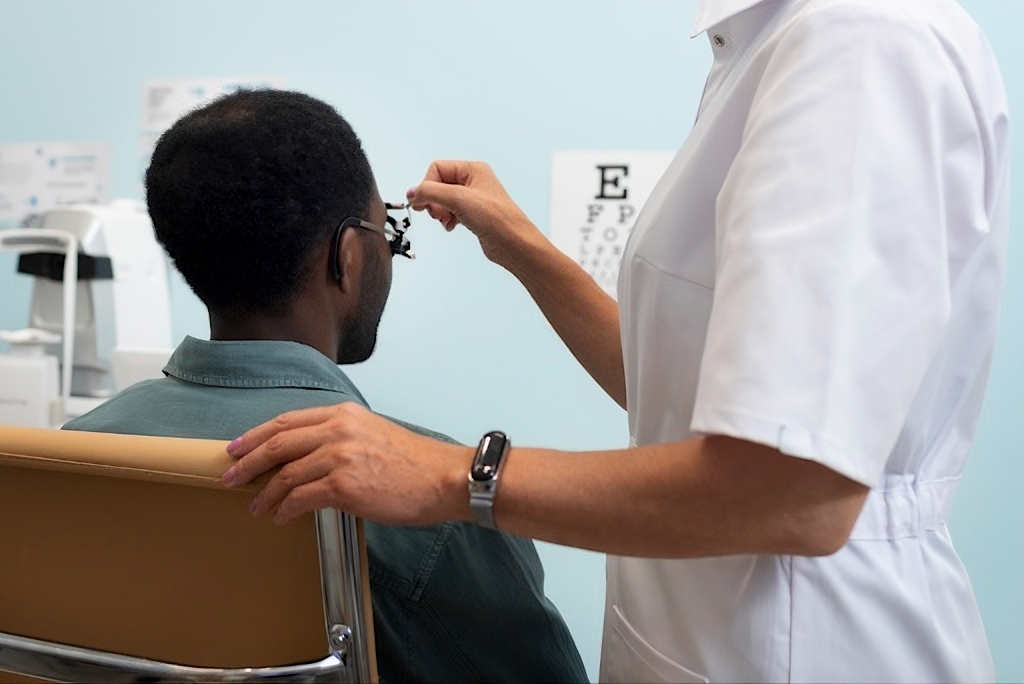
Why Pre-Assessment Is Required Before Eye Surgery?
Laser eye surgery permanently reshapes the cornea to correct refractive errors such as short-sightedness, long-sightedness, and astigmatism . Because of this, patient selection must be precise.
The comprehensive pre-assessment helps ensures:
- The cornea is healthy are structurally suitable for laser correction
- The prescription is stable and safe to treat
- There are no hidden eye diseases or risk factors that could affect surgical safety
- The most suitable procedure, such as LASIK or CLEAR Pro, is recommended based on the patient’s eye characteristics and lifestyle
Without this step, surgical outcomes may become less predictable and the risk of complications may increase .
Step 1: Initial Consultation and Medical History Review
The process usually begins with a detailed consultation to better understand the patient’s eye health, medical history, and visual needs .
The ophthalmologist will typically review:
- Current vision problems
- History of glasses or contact lens use
- Past eye conditions or surgeries
- General medical conditions (e.g., diabetes, autoimmune diseases)
- Current medication usage
- Lifestyle and occupational requirements
This information helps identify any medical or ocular conditions that may influence treatment suitability.
Step 2: Vision and Refraction Testing
This step measures the current prescription and evaluates how well the eyes focus.
Tests performed include:
- Visual acuity test (reading an eye chart)
- Refraction test to determine prescription
- Assessment of myopia, hyperopia, or astigmatism
These measurements help determine:
- Current prescription
- Whether the prescription has stabilised over time
A stable prescription is essential before surgery can be considered.
Step 3: Corneal Mapping (Corneal Topography)
Corneal mapping is one of the most important parts of the assessment.
It creates a detailed 3D map of the cornea’s surface.
This test evaluates:
- Corneal shape and curvature
- Early signs of corneal disorders such as keratoconus
- Surface symmetry
If significant corneal irregularities are detected, laser vision correction may not be recommended, or additional investigations may be required.
Step 4: Corneal Thickness Measurement
Corneal thickness (pachymetry) determines whether there is sufficient corneal tissue for safe laser vision correction .
Why it matters:
- Laser surgery reshapes the cornea by removing a precisely calculated amount of corneal tissue
- Thin corneas may increase the risk of post-operative corneal instability in suitable cases
- Adequate corneal thickness helps ensures that enough corneal tissue remains after treatment to maintain long-term structural stability
Patients with insufficient corneal thickness may be advised against LASIK or CLEAR Pro, or may be recommended alternative vision correction options.
Step 5: Dry Eye and Tear Film Evaluation
Tear quality is critical for healing and post-surgery comfort.
What is assessed:
- Tear production
- Tear film stability
- Signs of dry eye disease or ocular surface abnormalities chronic dryness
Patients with severe dry eye conditions may need treatment before being reconsidered for laser vision correction.
Step 6: Pupil Size Measurement
Pupil size is measured under different lighting conditions.
Purpose of this test:
- Identify the potential risk of glare or halos low-light conditions
- Ensure proper laser treatment zone planning
- Improve post-surgery visual quality outcomes
Larger pupils may require more detailed planning to achieve the best visual outcome .
Step 7: Eye Pressure Check
Intraocular pressure is measured to screen for conditions such as glaucoma.
Why it is important:
- High eye pressure can indicate underlying eye disease
- Certain eye conditions may affect surgical suitability and safety
- Ensures overall eye health stability before surgery
This is a standard part of a comprehensive eye examination.
Step 8: Retinal and Internal Eye Examination
. Dilating eye drops may be used to enlarge the pupils, allowing the ophthalmologist to perform a detailed examination of the back of the eyes which are retina, optic nerve, and macula.
This allows doctors to assess:
- Retina health
- Optic nerve condition
- Macular abnormalities
- Signs of retinal degeneration or other abnormalities
A healthy retina is essential for achieving the best possible visual outcome following laser vision correction .
Step 9: Surgeon Review and Suitability Decision
After all tests are completed, the ophthalmologist reviews the full results.
Final evaluation includes:
- Corneal structure and thickness
- Prescription stability
- Tear quality and dry eye risk
- Overall eye health
- Lifestyle considerations
- Expected surgical outcome
At this stage, the eye doctor will:
- Confirm suitability for LASIK or CLEAR Pro
- Recommend alternative treatment options if necessary
- Explain the benefits, potential risks, and expected recovery process
Step 10: Procedure Recommendation and Planning
If the patient is suitable, the ophthalmologist will recommend the most appropriate procedure.
Factors influencing the recommendation include:
- Corneal anatomy
- Degree of refractive error
- Dry eye risk
- Recovery expectations
- Lifestyle and visual needs
Patients are then guided through:
- Surgery scheduling
- Pre-operative instructions
- Post-operative care planning
How Long Does a Full Pre-Assessment Take?
A comprehensive laser eye surgery assessment typically takes:
- Approximately 1.5 to 3 hours, depending on tests required
- Longer if additional imaging or repeat measurements are needed
This time allows for a thorough evaluation to ensure accurate treatment planning and maximise surgical safety.
Why Pre-Assessment Quality Matters
A detailed pre-assessment directly impacts surgical success.
It helps:
- Identify patients who are suitable candidates for surgery
- Reduce the risk of post-operative complications
- Improve the predictability and long-term stability of visual outcomes
- Ensure patients have realistic expectations before treatment
A comprehensive assessment enables ophthalmologists to recommend the most appropriate treatment based on each patient’s individual eye condition and visual needs.
Final Thoughts
A full eye surgery pre-assessment in Malaysia is a detailed, multi-step clinical process designed to ensure safety and precision before laser vision correction. It includes vision testing, corneal mapping, corneal thickness measurement, tear film evaluation, and examination of the internal structures of the eye, followed by a comprehensive review by an ophthalmologist.
Each step plays a critical role in determining whether procedures like LASIK or CLEAR Pro are suitable and safe for the patient.
At VISTA Eye Specialist, eye doctors such as Dr. Alan Koh Kok Khiang, Chief Consultant Ophthalmologist, perform comprehensive pre-operative assessments by carefully evaluating each patient’s eye health, corneal characteristics, refractive error, tear film quality, and visual needs before recommending the most appropriate treatment. This detailed evaluation helps patients receive personalized recommendations and understand the expected benefits, risks, and recovery process before proceeding with laser vision correction.
A thorough assessment is not simply a routine step. It forms the foundation for safe, personalised, and successful long-term vision correction outcomes.
If you are considering LASIK or CLEAR Pro, book a comprehensive eye assessment at VISTA Eye Specialist to find out whether laser vision correction is suitable for your eyes.