
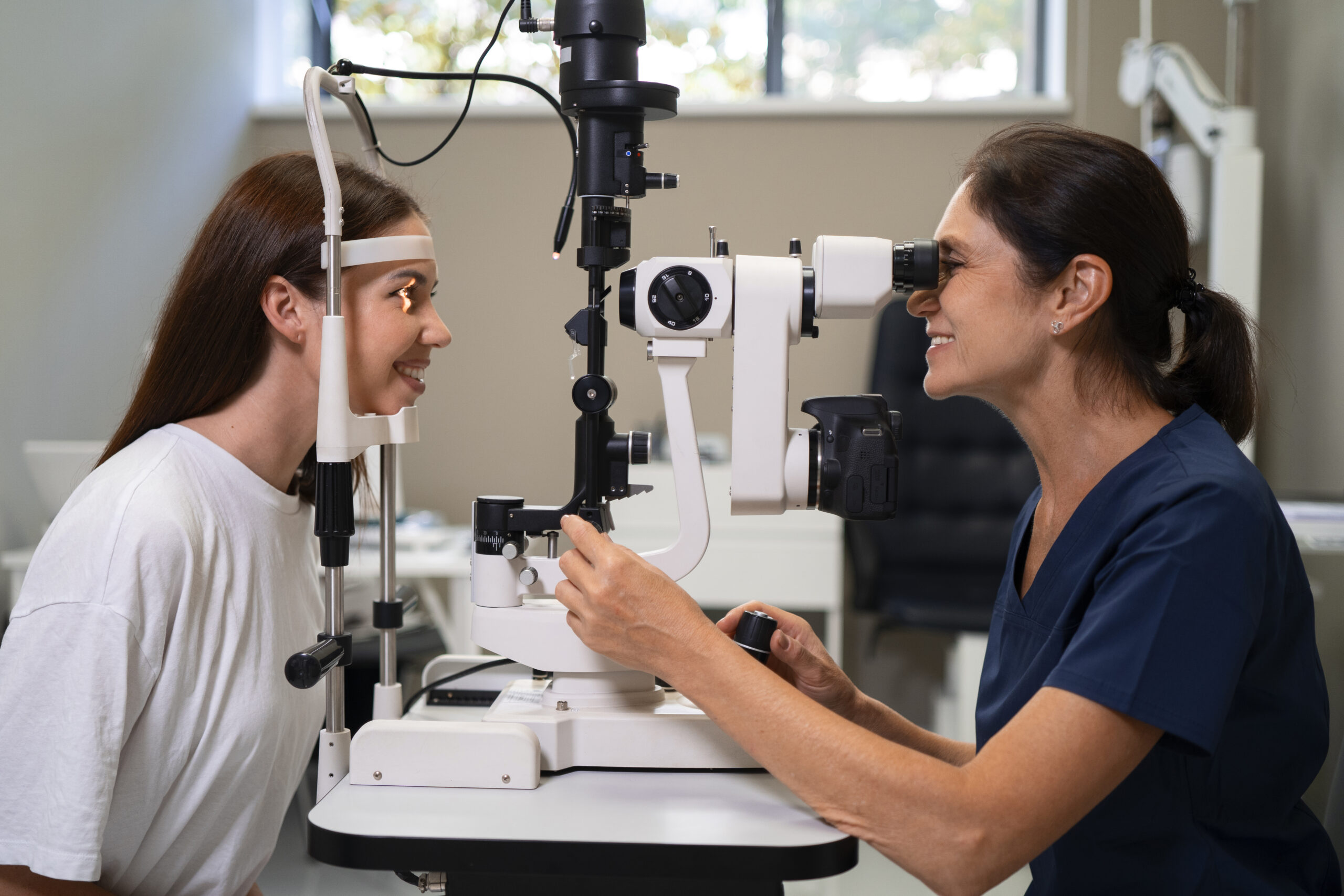
A full eye screening at a specialist eye clinic in Malaysia is a structured diagnostic process designed to evaluate overall eye health, detect early signs of disease, and assess visual clarity in detail.
Unlike a basic vision check, a comprehensive eye screening examines the overall eye health. It allows the eye specialists to assess important structure of the eye such as cornea, retina, optic nerve, tear film, and intraocular pressure to detect problems that may not yet be causing symptoms. It is commonly recommended for individuals with vision changes, existing eye conditions, or those undergoing pre-surgical assessments such as LASIK or cataract evaluation.
Understanding what happens during the screening helps patients prepare and know what to expect at each stage of the process.
Key Takeaways
- Full eye screening evaluates both vision and overall eye health
- It includes multiple tests beyond a standard vision check
- Pupil dilation may be required for detailed retinal examination
- Screening helps detect early eye diseases before symptoms appear
- Results guide treatment plans or surgical suitability decisions
Why Full Eye Screening Is Important
Many eye conditions develop gradually without obvious symptoms.
A full screening helps identify early signs of:
- Glaucoma
- Cataracts
- Macular degeneration
- Diabetic eye disease
- Corneal abnormalities
- Retinal problem
Early detection improves treatment outcomes and helps prevent long-term vision loss.
Initial Consultation and Medical History Review
The screening usually begins with a consultation.
The eye specialist will review:
- Existing vision problems
- Medical history
- Family history of eye conditions
- Current symptoms
- Medication use
This information helps guide which tests are required.
Visual Acuity Test
This is one of the most basic but important tests.
It measures how clearly you can see at different distances.
Patients are typically asked to:
- Read letters from an eye chart
- Identify progressively smaller text
- Test both near and distance vision
This helps determine the level of refractive error present.
Refraction Assessment
A refraction test determines the exact prescription needed for glasses or contact lenses.
During this process:
- Different lenses are tested
- Vision clarity is evaluated
- Adjustments are made until optimal clarity is achieved
This step helps refine vision correction accurately.
Eye Pressure Test (Tonometry)
This test measures intraocular pressure inside the eye.
It is important for detecting glaucoma.
The procedure may involve:
- A gentle air puff test
- A contact-based pressure measurement
Abnormal eye pressure levels may require further investigation.
Slit-Lamp Examination
A slit-lamp microscope allows detailed examination of the front structures of the eye.
It is used to assess:
- Cornea
- Iris
- Lens
- Eyelids
- Tear film
This helps detect conditions such as dry eye, cataracts, or corneal damage.
Pupil Dilation and Retina Examination
In many full eye screenings, eye drops are used to dilate the pupils.
This allows the doctor to examine the back of the eye, including:
- Retina
- Optic nerve
- Blood vessels
- Macular
Dilation provides a clearer view of internal eye structures that are not visible otherwise.
Temporary light sensitivity may occur after this step.
Retinal Imaging and Scans
Modern clinics may use imaging technology for more detailed analysis.
Common scans include:
- Optical coherence tomography (OCT)
- Fundus photography
- Retinal imaging systems
These tools help detect subtle changes in retinal layers and optic nerve health.
Corneal and Eye Surface Evaluation
The cornea is assessed for:
- Shape irregularities
- Thickness
- Dryness levels
- Surface health
This is especially important for patients considering laser vision correction or contact lens use.
Color Vision and Depth Perception Tests
Additional tests may assess:
- Ability to distinguish colors
- Binocular vision coordination
- Depth perception accuracy
These tests are particularly relevant for certain professions or vision complaints.
Dry Eye Assessment
Many clinics include dry eye evaluation as part of full screening.
This may involve:
- Tear break-up time measurement
- Meibomian gland assessment
- Eye surface staining tests
- Tear quantity measurement
Dry eye is increasingly common due to screen-heavy lifestyles.

Results Discussion and Diagnosis
After all tests are completed, the eye specialist will:
- Review all findings
- Explain current eye health status
- Identify any abnormalities
- Recommend treatment or monitoring plans
If necessary, further tests or specialist referrals may be arranged.
What Happens After the Screening
Depending on results, patients may be advised to:
- Update glasses or contact lens prescriptions
- Start treatment for identified conditions
- Schedule follow-up monitoring
- Consider surgical options if suitable
Preventive care plans may also be recommended for long-term eye health.
How Long a Full Eye Screening Takes
The duration varies depending on tests required.
A full screening typically takes longer than a basic eye check because it includes multiple diagnostic steps.
Additional time may be needed if pupil dilation is performed, as vision may remain temporarily affected afterward.
Who Should Go for Full Eye Screening
Full eye screening is recommended for:
- Adults over 40
- Individuals with vision changes
- Diabetic patients
- Contact lens users
- Those considering eye surgery
- Individuals with family history of eye disease
Regular screening helps maintain long-term eye health.
Final Thoughts
A full eye screening in a specialist eye clinic in Malaysia is a comprehensive evaluation designed to assess both vision quality and overall eye health.
It involves multiple diagnostic tests that help detect early eye conditions, refine prescriptions, and guide treatment decisions.
By understanding each step of the process, patients can approach their screening with clarity and confidence, ensuring timely detection and better long-term protection of their vision.
For individuals who want a clearer understanding of their eye health, a comprehensive eye assessment with an eye doctor such as Dr. Tan Chai Lee, Consultant Ophthalmologist, can help identify early signs of eye conditions and guide the next steps in care.
To find out more about full eye screening at VISTA Eye Specialist, book a comprehensive eye assessment with us today.