
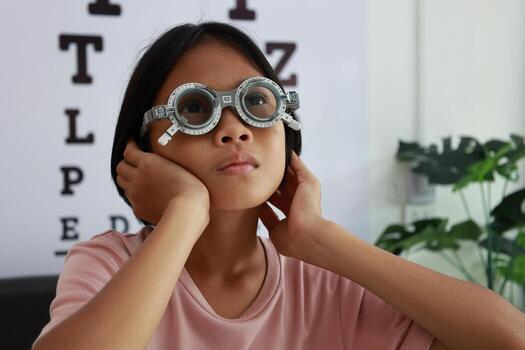
Many parents take the right step in bringing their child for an eye exam, but often it happens only once, with the assumption that everything is settled if no issues are found.
The reality is that children’s vision is constantly changing.
As their eyes grow and visual demands change, new problems can develop even if earlier exams were normal. That’s why regular children’s eye check-ups are an essential part of protecting their vision as they grow.
This article explains why ongoing eye care matters and how regular monitoring supports healthy visual development throughout childhood.
Key Highlights
- Children’s vision continues to change as they grow, even after a normal eye exam.
- Many childhood eye conditions develop without clear symptoms.
- School vision screenings do not replace comprehensive eye examinations.
- Regular monitoring supports your child’s learning, comfort, and early intervention.
- Consistent eye care helps protect long-term visual health.
Children’s Vision Changes as They Grow
A child’s eyes continue to develop well into their teenage years. During this period, changes in eye length, focusing ability, and coordination can affect how clearly and comfortably they see.
Regular eye check-ups allow eye specialists to track these changes over time. Early detection can identify nearsightedness (myopia) progression, focusing difficulties, or binocular vision issues before they begin to affect learning or daily activities.
Since vision development is ongoing, a normal result at one point does not guarantee that problems will not appear later. Regular check-ups provide a clearer picture of how a child’s vision is evolving and ensure timely intervention if needed.
Many Eye Conditions Develop Without Obvious Symptoms
Some childhood eye conditions do not cause pain or sudden vision loss. Because children have no reference point for what “normal vision” should feel like, they often assume their visual experience is typical and do not report problems unless prompted.
Conditions such as amblyopia (lazy eye), early myopia, or eye coordination problems may therefore progress quietly.
Does your child exhibit the following habits?
- Blurry distance vision that feels normal to them
Children may not realise they are seeing the board or distant objects less clearly if their vision has changed gradually.
- Closing or covering one eye when focusing
This can be a subconscious way to compensate for uneven vision or poor eye coordination, even if the child does not feel discomfort.
- Frequent eye rubbing without clear irritation
Visual strain or focusing fatigue, not allergies or dryness, can cause children to rub their eyes.
- Difficulty maintaining focus during reading or screen tasks
Vision-related fatigue can manifest as restlessness or a short attention span, which children rarely associate with eyesight issues.
- Occasional headaches after school or visual tasks
Children may not connect headaches with vision, especially if the discomfort resolves after a short rest.
Because these signs often feel normal to children, they are easy to overlook at home. By the time symptoms become obvious, vision changes may already be well established.
Routine eye examinations help bridge the gap between unrecognised visual changes and timely professional assessment, allowing potential issues to be addressed early.
School Screenings Are Helpful but Not Sufficient
School vision screenings play a role in identifying potential concerns, particularly basic distance vision issues. However, they are designed as broad checks rather than comprehensive clinical evaluations.
- Screenings usually focus on basic distance vision and may miss issues related to eye alignment, depth perception, visual processing, or how the eyes support sustained reading and classroom tasks.
- A full eye check-up goes further by evaluating how both eyes work together, how visual skills handle learning demands, and whether subtle issues are developing beneath otherwise acceptable vision results.
This distinction matters because many vision conditions are most manageable during specific developmental windows. Relying on screenings alone may delay intervention until those windows begin to narrow.
Screening outcomes should be viewed as a prompt for further evaluation rather than a confirmation that a child’s visual development is fully on track.
Regular Monitoring Supports Learning and Timely Intervention
Clear and comfortable vision plays a direct role in how children read, write, use digital devices, and engage in the classroom.
When visual demands increase with age, especially during transitions to higher grades, even small unrecognised changes in vision can affect concentration, stamina, and learning confidence.
Children may appear distracted or fatigued without realising that their vision is contributing to the problem.
Regular eye check-ups allow these changes to be tracked over time rather than assessed in isolation.
Seeing the same eye care provider consistently makes it easier to recognise patterns, such as gradual myopia progression, emerging focusing difficulties, or increasing visual strain.
What may appear insignificant during a single visit often becomes clinically meaningful when viewed as part of a trend.
This continuity supports better decision-making. Eye specialists can distinguish between changes that require intervention and those that can be safely observed, reducing the risk of both delayed treatment and unnecessary correction. It also allows action to be taken while the visual system is still responsive.
Start Protecting Your Child’s Vision Through Ongoing Care
Regular eye check-ups are essential for supporting a child’s visual development.
They help identify changes early, monitor progression, and ensure that vision continues to support learning and daily activities at every stage.
To make sure your child’s vision is developing as it should, schedule an eye exam with VISTA Eye Specialist for ongoing professional guidance and tailored care.