
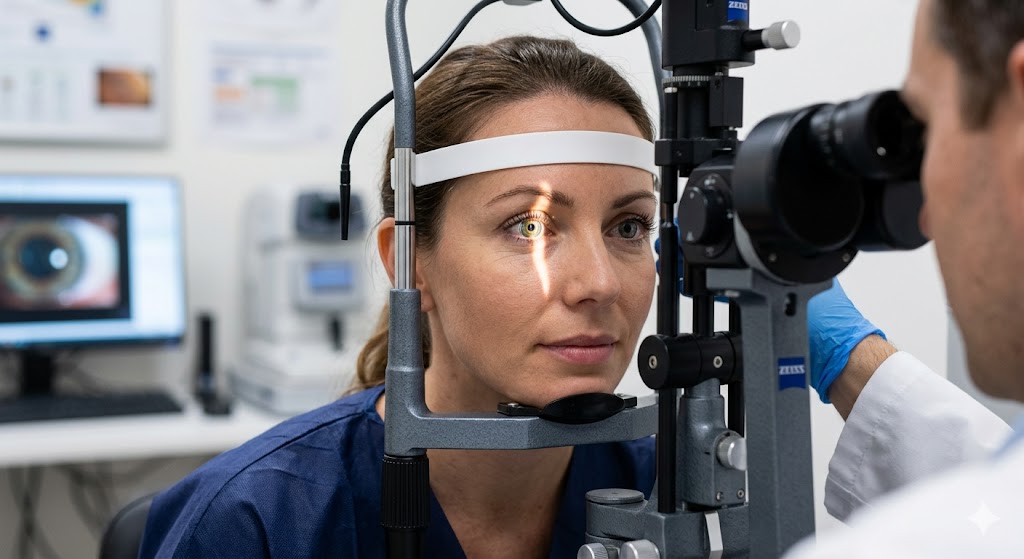
Implantable Collamer Lens (ICL) surgery has become a sought-after solution for vision correction, particularly among patients with high myopia or thin corneas. Compared to LASIK or PRK, ICL surgery is often more expensive, leading many to wonder whether the additional cost is justified.
This article explains why ICL surgery commands a higher price in Malaysia, and why patients continue to choose it despite the cost.
Key Takeaways
- ICL surgery is generally more costly due to premium lens materials, advanced technology, and surgical complexity involved.
- Patients choose ICL for high prescription correction, reversibility, and high-quality visual outcomes
- The total cost includes lens type, surgeon expertise, pre-operative assessment, add-ons, and post-operative care.
- For many, long-term benefits and safety profile justify the higher upfront investment.
Why ICL Surgery Costs More

Several factors contribute to the higher price of ICL surgery compared to other vision correction options:
1. Premium Lens Material
ICL lenses are made from collamer, a biocompatible material designed to work harmoniously with the eye’s natural physiology. This ensures:
- A low-risk of rejection or long-term complications
- Built-in UV filtering properties
- Stable, long-lasting optical clarity
The specialised manufacturing of these lenses contributes significantly to the overall surgical cost.
2. Advanced Technology
ICL surgery requires highly precise measurements and specialized equipment:
- Accurate assessment of anterior chamber depth and lens sizing
- Laser-assisted marking and implantation tools improve precision
- Availability of toric and EVO lenses for astigmatism correction and improved optical performance
These technologies ensure safety and optimised visual outcomes, but also increase overall costs
3. Surgeon Expertise
ICL implantation is more complex than corneal laser procedures. Ophthalmologists with extensive experience and a strong track record in ICL surgery charge higher professional fees.
4. Comprehensive Pre-Operative Assessment
Patients must undergo through evaluation to ensure suitability for ICL:
- Detailed eye examination and refractive stability assessment
- Corneal topography and anterior chamber analysis
- Pupil size measurement and precise lens calculation
These assessments are typically more extensive than those required for standard LASIK, contributing to the higher cost.
5. Post-Operative Care
ICL patients require careful follow-up to monitor healing and lens positioning. Follow-ups typically include:
- Multiple follow-up over six months
- Intraocular pressure monitoring
- Early detection and management of potential complications
This extended aftercare enhances safety but adds to the overall expense.
Why Patients Still Choose ICL
Despite the higher cost, many patients opt for ICL due to its distinct advantages:
1. Suitable for High Prescriptions
ICL can effectively correct moderate to severe myopia and astigmatism, especially in cases where LASIK is not suitable due to corneal thickness limitations.
2. Reversible Procedure
Unlike LASIK, ICL lenses does not permanently alter after the corneal tissue. The lens can be removed or replaced if necessary, offering greater flexibility.
3. High-Quality Vision
Many patients report excellent vision and reduced visual disturbances such as glare or halos, particularly with newer lens designs such as EVO lenses.
4. Preservation of Corneal Structure
ICL does not involve removing corneal tissue, reducing risk of complications such as corneal ectasia. This contributes to a strong long-term safety profile when patients are appropriately selected.
5. Long-Term Investment in Vision
Although upfront costs are higher, the long-term benefits, including stable vision, fewer structural changes to the eyes, and suitability for active lifestyles make ICL a valuable investment for many patients.
Typical ICL Cost in Malaysia
Costs vary depending on the lens type, surgeon experience, and clinic packages:
Lens Type | Approximate Cost (MYR) per Eye | Notes |
Standard ICL | 17,000 – 23,000 | Suitable for moderate myopia |
Toric ICL | 21,000 – 27,000 | Corrects astigmatism |
Premium EVO Lens | 25,000 – 31,000 | Enhanced optics, UV protection, wider optical zone |
Additional services such as pre-operative assessments, sedation, or extended aftercare may increase the total cost.
Final Thoughts
ICL eye surgery is more expensive due to premium materials, advanced technology, and comprehensive care requirements. However, its suitability for high prescriptions, reversibility, strong visual outcomes and preservation of corneal structure make it an attractive option for many patients.
For individuals seeking a long-term, high-quality vision correction solution, the higher cost of ICL surgery is often viewed as an investment in better eyesight and overall ocular health.