
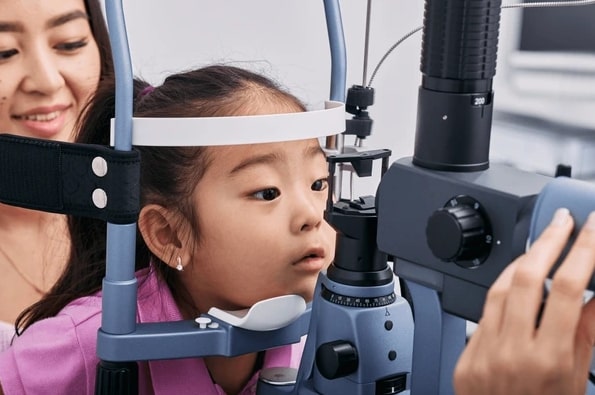
Many parents assume that eye check-ups for kids are only necessary once they start going to school or complain about blurry vision.
In reality, children’s eyes develop rapidly during the early years, and vision problems can often progress quietly without obvious symptoms.
That’s why a proactive approach from parents is warranted. Knowing when to schedule eye exams and understanding what happens during these appointments can go a long way in protecting your child’s visual health.
This article outlines the recommended timing for children’s eye exams and guides what parents can expect at each stage.
Key Highlights
- Children should begin eye exams earlier than most parents expect, with checks recommended from infancy through school age.
- Kids’ eye exams are age-appropriate and do not rely solely on letter charts or reading ability.
- Eye exams assess not just visual clarity, but also eye coordination, alignment, and overall eye health.
- Most children cope well with eye exams when the process is paced and adapted to their comfort level.
- Early eye exams help identify vision issues that may not yet show obvious symptoms.
When Should Children Start Eye Exams
Eye examinations should begin earlier than most parents expect. Vision development starts from infancy, and certain conditions are easier to manage when detected early.
The general guidelines for a child’s eye exam are as follows:
- Around 6 to 12 months
An early assessment can help detect congenital issues such as eye alignment problems, significant refractive errors, or structural abnormalities.
- Around 3 years old
At this age, children can participate more actively in vision testing. Exams focus on visual acuity, eye coordination, and early signs of amblyopia (also known as lazy eye).
- Before starting school (around 5 to 6 years old)
This is a critical checkpoint. Clear and comfortable vision is essential for reading, writing, and overall classroom learning.
- School-age years and beyond
Once children are in school, eye check-ups are generally recommended every one to two years, or more frequently if advised by an eye specialist.
These timelines may vary depending on family history, existing eye conditions, or concerns raised by parents or teachers.
What Happens During a Kids’ Eye Exam?
Children’s eye exams are tailored to their age and comfort level. They differ from adult eye tests and do not rely solely on reading letters.
Here’s what parents can expect during a typical pediatric eye exam:
- Vision assessment
Using age-appropriate charts, pictures, or symbols, the doctor evaluates how clearly each eye sees.
- Eye alignment and movement checks
These tests assess whether the eyes are working together properly and moving smoothly in all directions.
- Refraction testing
This identifies nearsightedness, farsightedness, or astigmatism, even if the child is not complaining of blurred vision.
- Eye health examination
A careful inspection of the front and back of the eyes to ensure normal development and helps detect any underlying conditions.
The goal of an eye exam is to assess how the eyes and brain work together. It also helps determine whether glasses are needed and identify appropriate treatments if necessary.
What Should Parents Expect During a Visit to an Eye Specialist?
It’s natural for parents to worry that their child may feel anxious or uncooperative. In practice, most children respond well when exams are conducted in a calm and child-friendly environment.
- The visit usually takes longer than a simple vision screening, but is paced carefully.
- Eye specialists may break the exam into short segments, allowing children time to adjust between tests.
- Younger children are guided using pictures, shapes, matching games, or simple instructions instead of letter charts.
Not every test needs to be completed perfectly in one sitting. Eye specialists are trained to work with children of different ages and temperaments, and many tests feel more like games than medical procedures. Parents are encouraged to remain nearby throughout the visit. Your presence provides reassurance and helps keep your child calm, allowing the eye specialist to explain findings and next steps clearly as the exam progresses.
Supporting Healthy Vision From the Very Beginning
Children’s eye exams play an important role in identifying vision concerns early, often before a child can recognise or describe a problem themselves.
By knowing when to start and what to expect, parents can take a more confident and proactive approach to their child’s eye care.
If your child is due for an eye check or if you have concerns about their vision development, you can schedule an eye exam with VISTA Eye Specialist for a comprehensive, age-appropriate assessment.